VIT | Vidyalankar Institute of Technology

ELECTRONICS AND TELECOMMUNICATION PG

Established in: 2010

Department Strength

The EXTC department provides high-quality technical education, validated by accreditations from esteemed organizations such as the National Board of Accreditation (NBA), the National Assessment and Accreditation Council (NAAC), and the University of Mumbai. 

Its faculty consists of experts holding doctoral (Ph.D.) and master’s (M.E. or M.Tech.) degrees from top institutions, including IITs, NITs, VJTI, and other notable regional engineering colleges. 

Graduates from the EXTC department occupy important positions in government and various industries both in India and internationally. Key employers of our students include the Indian Navy, Works Applications, Reliance Jio, Vodafone, TCS, Capgemini, and Infosys. Additionally, many students are pursuing further studies at prestigious universities such as Illinois State University, California State University, Georgia Tech, and Arizona State University. Numerous alumni have also successfully established their own startups. 

The department maintains strong relationships with its graduates and actively bridges the gap between academia and industry through signed MoUs with various organizations. It has also established Centers of Excellence in IoT, GIS, and Remote Sensing. 

About the Faculty

The department boasts qualified faculty members who specialize in various emerging fields. They impart their knowledge and experience across a diverse array of subjects, including, Embedded Systems and Internet of Things (IoT), Smart Antennas, VLSI, Optical Communication, Wireless Communication, various programming languages, Image Processing, Remote Sensing, Database Management Systems (DBMS), Big Data, Data Analytics, and Machine Learning. 

In addition to teaching, faculty members engage in quality research and consultancy projects. Their findings are published in esteemed journals and presented at conferences, with contributions to IEEE, Springer, Wiley Interscience, and Elsevier. Several faculty members have received research grants from ISRO, University of Mumbai and TIH-IoT initiatives, while some hold patents. Many are also involved in designing and updating the technical syllabus as part of the Board of Studies (Syllabus Committee) at the University of Mumbai. They utilize modern digital teaching tools to enhance the delivery of knowledge. 

Dr. Girish Gidaye

Professor

I resonate deeply with the quote by Thomas Jefferson, “Power is gained by sharing knowledge.” Over the past 26 years, I have dedicated myself to academics, teaching a wide range of undergraduate and postgraduate courses. Teaching has always been a source of immense joy for me, as it offers the opportunity to enlighten young minds and contribute to their intellectual growth. 

Inspired by Dr. A.P.J. Abdul Kalam’s philosophy, “A good teacher, with meticulous planning, prepares himself for teaching,” I have always strived to be a committed educator and a lifelong learner. While I aspired to be a teacher early on, I strongly believed that practical industry experience is essential to become an effective educator. This belief led me to initially work in the industry before pursuing and completing my master’s degree to fulfill my goal of entering academia. 

Throughout these 26 years, alongside my teaching responsibilities, I have shouldered various academic and administrative roles such as Head of Department, NBA and NAAC Coordinator, Deputy Controller of Examinations, and Member of the Board of Studies. 

Driven by a passion for research, I pursued a Doctoral program with a focus on signal processing. My research interests include speech processing, image processing, VLSI design, and machine learning. I have undertaken several projects in these domains, applying both theoretical knowledge and practical insight. 

I have organized and led more than ten Short-Term Training Programs (STTPs), workshops, conferences, and symposiums at both national and international levels. I have also served as a resource person for various reputed conferences and journals. 

My research contributions are published in peer-reviewed international journals and conferences, primarily in the areas of VLSI and speech processing. All my publications are indexed in Scopus, with several also indexed in ESCI and SCIE. 

Microwave Engineering, Wireless Networks, Statistical Signal Analysis

Embedded systems

VLSI,Biomedical Signal Processing,Image Processing,Robotics

Microwave engineering, Antenna design 

Data Analytics, Machine Learning, Business Analytics, Mathematical Modeling, Optimization and Simulation Techniques, Linear & Nonlinear Programming, Manufacturing Analytics – Process Control, capability analysis, Supply Chain Analytics 

Embedded Systems,  Internet of Things (IoT) and Security 

Nonlinear Optics,  Optical Sensors 

Mobile communication,Wireless Communication,Digital Electronics 

Signal processing, VLSI, ML AND AI 

IoT and Sensor Technology, communication, AI/ML 

Microwave Image Processing, VLSI Design, Signal Processing, Machine Learning and Artificial Intelligence. 

Wireless sensor network, Mobile communication 

Signal Processing, Image Processing, Machine Learning anf Artificial Intellegence 

Internet of Things, Machine Learning 

Image Processing, Deep learning, Medical Image Analysis 

Top notch Laboratories

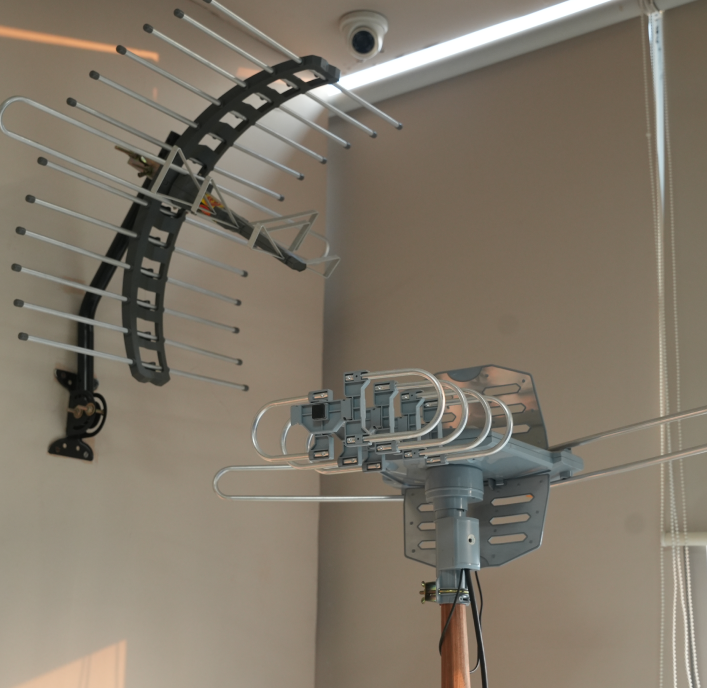
Concepts are being realized in the laboratory. The laboratories established in The Department of Electronics and Telecommunication Engineering play a vital role in converting the concept in the real life module. Well-equipped laboratories create the interest in the minds of students. Our laboratories have everything right from simple devices to analyzers. The Department of Electronics and Telecommunication Engineering have been exploring all the possibilities for research and development, be it the field of Mobile cellular communication, Wireless communication, IoT, Satellite communication, Telecommunication Network management, optical systems, RF & Microwave, VLSI and signal processing. Our Department has different kinds of collaborations with outside world like, e-YANTRA (IIT Bombay), ARM University Program, Cypress Semiconductor, IBM, Microchip, Camlin Kokoyo, Bharat Forge, SVNIT Surat, TIFR, DIAT, Japanese Universities and HBCSE.

PhD_VISION_MISSION

To be recognized as a centre of excellence in the field of Electronics and Telecommunication Engineering where learners are nurtured in a scholarly environment to evolve into competent professionals to benefit society.

Evolve a curriculum which emphasizes on strong engineering fundamentals with the flexibility to choose advanced courses of interest and gain exposure to tools and techniques in Electronics and Telecommunication Engineering. 

Encourage a teaching-learning process in which highly competent faculty share a symbiotic association with the institutes of repute. 

Facilitate creation and dissemination of Electronics and Telecommunication knowledge through a digitally- enabled learning environment. 

Develop academic and infrastructural facilities with modern equipment and other learning resources and encourage reciprocal sharing with other institutes through networking. 

Establish a center of excellence to enhance academia – Electronics and Telecommunication industry partnership and work on collaborative projects. 

  • Graduates will be able to apply Electronics and Telecommunication Engineering Knowledge to design technically sound systems, adopt new technologies through life-long learning, and to lead a successful career in diverse domains and streams.

  • Graduates will be able to show ability of research and development and entrepreneurship skills. 

  • Graduates will be able to exhibit professionalism, ethics, team work, and social awareness in their career.

  • Students will be able to apply the fundamentals of VLSI, IOT & Embedded systems, Signal Processing, Machine Learning and Advanced Communication Systems in building real life applications.

  • Students will be able to use industry specific tools to design systems in the field of Electronics & Telecommunication Engineering.

Engineering Knowledge: Apply the knowledge of mathematics, science, engineering fundamentals, and engineering specialization to the solution of complex engineering problems

Problem Analysis: Identify, formulate, review research literature, and analyze complex engineering problems reaching substantiated conclusions using first principles of mathematics, natural sciences, and engineering sciences.

Design/development of Solutions: Design solutions for complex engineering problems and design system components or processes that meet the specified needs with appropriate considerations for the public health and safety, and the cultural, societal, and environmental considerations.

Conduct Investigations of Complex Problems: Use research-based knowledge and research methods including design of experiments, analysis and interpretation of data, and synthesis of the information to provide valid conclusions.

Modern Tool Usage: Create, select, and apply appropriate techniques, resources, and modern engineering and IT tools including prediction and modeling to complex engineering activities with an understanding of the limitations.

The engineer and society: Apply reasoning informed by the contextual knowledge to assess societal, health, safety, legal and cultural issues and the consequent responsibilities relevant to the professional engineering practice.

Environment and sustainability: Understand the impact of the professional engineering solutions in societal and environmental contexts, and demonstrate the knowledge of, and need for sustainable development.

Ethics: Apply ethical principles and commit to professional ethics and responsibilities and norms of the engineering practice.

Individual and Teamwork: Function effectively as an individual, and as a member or leader in diverse teams, and in multidisciplinary settings.

Communication: Communicate effectively on complex engineering activities with the engineering community and with society at large, such as, being able to comprehend and write effective reports and design documentation, make effective presentations, and give and receive clear instructions.

Project Management and Finance: Demonstrate knowledge and understanding of the engineering and management principles and apply these to one’s own work, as a member and leader in a team, to manage projects in multidisciplinary environments.

Life-long Learning: Recognize the need for and have the preparation and ability to engage in the independent and life-long learning in the broadest context of technological change.

DOWNLOAD SYLLABUS

PG Syllabus

PG First Year Scheme & Syllabus

DOWNLOAD SYLLABUS

PG Syllabus

PG First Year Scheme & Syllabus

DOWNLOAD newsletter

October
2024

July
2024

April
2024

January
2024

DOWNLOAD newsletter

October
2025

July
2025

April
2025

January
2025